
By Nina Garayan, Esq.
Some of the most powerful therapies don’t happen inside four walls.
They happen under open skies.
As a mother to a child with autism, I have learned that growth does not only come only from structured sessions and clinical settings. Sometimes it comes from movement. From fresh air. From rhythm. From the quiet predictability of footsteps along a trail.
For our family, hiking has become more than recreation. It has become regulation. It has become connection. It has become peace.
And what I have witnessed personally is supported by an expanding body of neuroscience and environmental health research.
The Neuroscience of Nature and Regulation
To understand why hiking can be so beneficial for children with autism, we need to understand how the nervous system functions.
Autism is often associated with differences in sensory integration, autonomic nervous system regulation, and cortical connectivity. Many autistic children experience heightened sympathetic nervous system activation — meaning their “fight or flight” system is more easily triggered. This can manifest as anxiety, sensory overload, irritability, or dysregulation.
Spending time in natural environments has been shown to increase parasympathetic nervous system activity — the system responsible for rest, digestion, and calm states. Research measuring heart rate variability (HRV), cortisol levels, and blood pressure consistently demonstrates that exposure to green space shifts the nervous system toward parasympathetic dominance.
This shift is critical for children with autism, who often experience chronic stress activation due to sensory demands in modern environments.
When a child hikes in nature, multiple calming variables converge:
- Reduced artificial noise
- Lower visual overstimulation
- Rhythmic auditory stimuli (wind, water, leaves)
- Natural light exposure regulating circadian rhythms
Neuroscientifically, this reduces amygdala hyperactivation — the brain’s threat detection center — and supports prefrontal cortex engagement, which governs emotional regulation and executive function.
Hiking is neurologically rich.
Walking on uneven terrain activates the cerebellum, basal ganglia, and vestibular nuclei. These regions are responsible for motor coordination, balance, and sensory integration. Research in autism has shown that cerebellar differences are common, particularly in regions responsible for motor planning and sensory modulation.
Proprioceptive input — the deep pressure and joint feedback received when climbing hills or stepping over rocks — stimulates mechanoreceptors that send organizing signals to the central nervous system. Occupational therapy literature describes this type of input as “regulating” because it helps modulate cortical arousal levels.
In simpler terms, hiking gives the brain structured movement information that helps it organize itself.
Emerging research in neuroimaging has shown that time in natural environments decreases activity in the brain’s default mode network (DMN), particularly in areas linked to rumination and repetitive thought patterns.
The DMN is also implicated in self-referential processing and internal narrative loops. Some research suggests atypical DMN connectivity in individuals with autism. Natural environments appear to quiet excessive DMN activity and promote attentional restoration.
The Attention Restoration Theory (ART), supported by multiple cognitive neuroscience studies, proposes that nature provides “soft fascination” — gentle, engaging stimuli that allow the brain’s directed attention systems to recover from fatigue.
For children with autism, whose executive functioning resources are often heavily taxed, this restoration can be profound.
Moderate aerobic activity increases brain-derived neurotrophic factor (BDNF), a protein essential for neuroplasticity and synaptic growth. Exercise also enhances dopamine and serotonin regulation, both of which influence mood, motivation, and emotional stability.
Meta-analyses examining physical activity interventions in children with autism have shown improvements in stereotyped behaviors, attention, and adaptive functioning. When physical activity occurs outdoors, studies indicate amplified mental health benefits compared to indoor exercise alone.
This suggests that hiking provides a dual neurological benefit: movement-induced neurochemical support combined with environment-induced stress reduction.
Natural light exposure plays a critical role in regulating melatonin production. Children with autism frequently experience disrupted sleep cycles, often related to irregular melatonin signaling.
Daytime exposure to natural sunlight, combined with physical exertion, improves circadian alignment. Research shows that outdoor physical activity improves sleep onset latency and sleep efficiency in children.
On hiking days, I see this in Alex. His sleep is deeper. His body seems more settled. His transitions the next day are smoother.
Beyond measurable physiological changes, hiking fosters autonomy and mastery. The prefrontal cortex strengthens through problem-solving and navigation. Completing a trail activates reward pathways in the brain, reinforcing confidence and resilience.
Importantly, nature reduces social performance pressure. There are no fluorescent lights. No structured expectations. No complex social demands. Just movement, exploration, and presence.
For many autistic children, that absence of pressure allows authentic engagement.
What I See in Alex
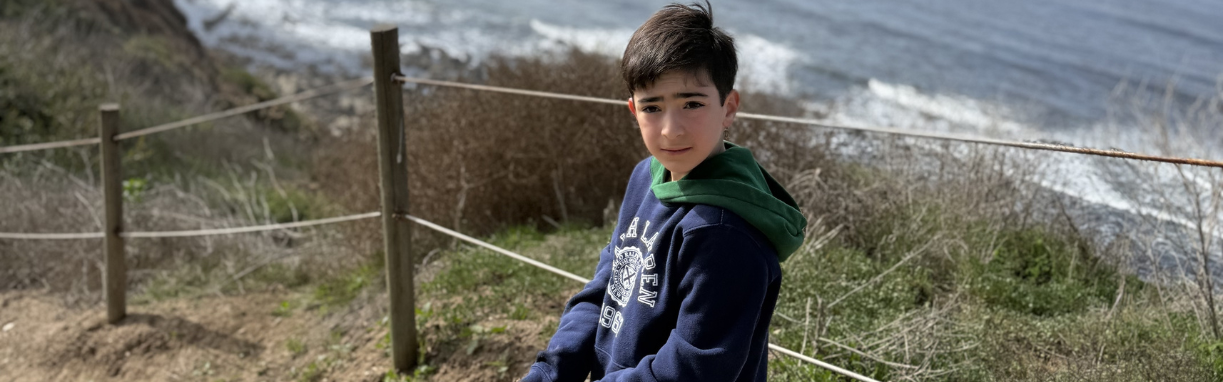
Alex loves hiking. He loves the wind, the rhythm, the openness. There is something about wide spaces that allows him to breathe differently.
When we hike, he is not navigating noise or overstimulation. He is simply moving. His body aligns. His mood steadies. His eyes soften.
It is one of the few environments where I see complete regulation without intervention.
As his mother, that is everything.
Hiking is not a cure. It is not a replacement for therapy. But neuroscience increasingly supports what many families already know: natural environments and structured movement profoundly impact the developing brain.
When accessible and safe, hiking can be one of the simplest yet most neurologically supportive practices for children with autism.
Sometimes healing is not about adding more.
Sometimes it is about returning to something elemental — movement, nature, rhythm, and connection.
With love and advocacy,
Nina Garayan, Esq.
Co-Founder, Walking With Alex Foundation