
Walking With Alex Foundation
For families in the autism community, few questions carry more hope than this one: What will the future bring?
As the co-founder of the Walking With Alex Foundation, I spend a great deal of time thinking about that future—particularly for children with significant communication challenges who will one day become adults. Therapies, educational programs, and augmentative and alternative communication devices have already changed countless lives. But emerging technology may eventually open doors that we can barely imagine today.
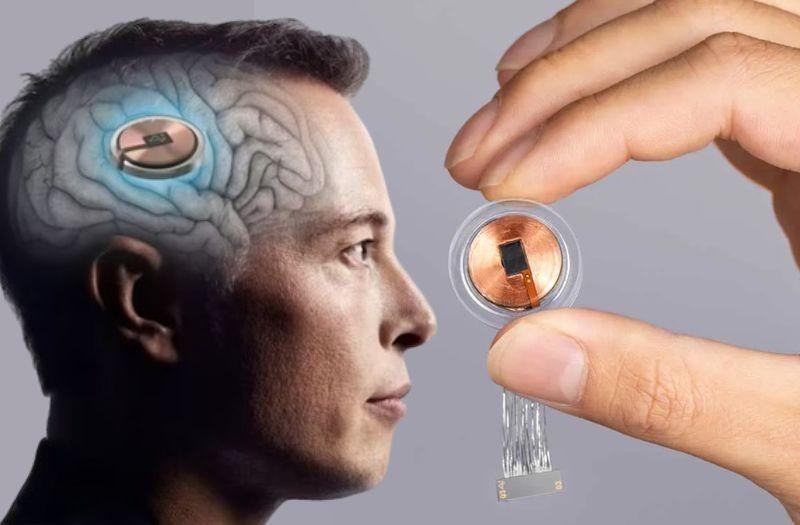
One of the most fascinating developments is Neuralink, the neurotechnology company founded by Elon Musk.
Neuralink is developing a brain-computer interface, commonly called a BCI. In simple terms, its technology is designed to create a direct connection between activity in the human brain and an external computer.
Its implant uses extremely small electrodes placed in the brain to record neural activity. Computer algorithms then attempt to interpret those signals and translate them into digital commands.
Neuralink’s first major application, called Telepathy, is being developed primarily for people with paralysis. The goal is to allow a person to control a computer, phone, or even an assistive robotic device through neural signals rather than conventional physical movement. Neuralink’s human trial participants have already demonstrated the ability to control computers and perform everyday digital activities using the system.
And Neuralink is not alone. Researchers around the world are developing BCIs that attempt to translate brain activity into communication.
In June 2026, Nature Medicine published remarkable results involving an individual with ALS who used an implanted brain-computer interface independently at home for nearly two years. The participant used the system for more than 3,800 hours, communicating almost two million words at an average rate of 56 words per minute.
The National Institutes of Health has similarly highlighted advances in technology capable of translating brain activity into audible speech for individuals who have lost their ability to speak because of paralysis.
These accomplishments lead me to a question that is particularly meaningful to our community:
Could technology like this someday benefit nonspeaking autistic individuals?
What Could This Mean for Autism?
It is important to be very clear: Neuralink is not currently an approved treatment for autism, and there is no Neuralink device presently proven to enable nonspeaking autistic individuals to communicate.
But that does not mean we should ignore what this technology could potentially become.
Autism is extraordinarily complex, and the reasons an autistic person may not use spoken language can be very different from the reasons someone with ALS or paralysis cannot speak. We therefore cannot assume that because a BCI can restore communication in someone whose speech muscles are impaired, the same technology will automatically work for a nonspeaking autistic person.
That distinction matters.
But so does the research.
A 2025 review of communication in autistic adults found that a substantial proportion do not develop fluent spoken language by adulthood and that communication barriers can affect relationships, healthcare, employment, and everyday life. The authors specifically emphasize the importance of augmentative and alternative communication for autistic adults.
Research specifically exploring brain-computer interfaces and autism is also developing. Scientists are studying whether BCI technologies could eventually have applications involving communication, social interaction, and other forms of support for autistic individuals, although the evidence remains preliminary.
Imagine What the Future Could Look Like
This is where I believe we should allow ourselves to think beyond what technology can do today.
Imagine an autistic adult who understands the world around him but has significant difficulty translating his thoughts into spoken words or physical communication.
What if, one day, a safe and sufficiently advanced interface could recognize some form of intentional neural activity and translate it into words on a screen?
What if those words could then become synthesized speech?
What if someone who had spent decades unable to reliably express complex thoughts could tell his parents what he wanted, what frightened him, what made him happy, whether he was in pain, or simply what he had been thinking?
Today, those questions remain hypothetical for autism.
But the fundamental concept of translating neural activity into communication is no longer science fiction. It is already being demonstrated in people with certain severe motor and speech impairments.
And technology rarely remains where it begins.
Computers that once filled entire rooms eventually became devices we carry in our pockets. Technologies originally developed for one medical condition have repeatedly found applications in entirely different populations.
Brain-computer interfaces may follow a similar trajectory.
We Must Also Remember Autistic Adults
Much of the public conversation surrounding autism understandably focuses on children.
But autistic children become autistic adults.
A 2026 systematic review of augmentative and alternative communication research found a striking imbalance: of 69 studies examined involving autistic people, only three investigated AAC outcomes specifically in adults.
That should concern us.
We cannot stop searching for solutions when a child turns 18.
For adults with profound communication challenges, technology could potentially become one part of a larger system of support—alongside AAC, therapy, education, employment assistance, community programs, appropriate housing, and lifelong care.
Perhaps future BCIs will not look anything like today’s Neuralink implant. Perhaps they will become smaller, safer, less invasive, more precise, or even entirely non-invasive. Artificial intelligence may become dramatically better at interpreting individualized patterns of communication. Other technologies we have not yet conceived may emerge.
We simply do not know.
But we should be investing in finding out.
Hope Must Walk Beside Science
At the Walking With Alex Foundation, our work today is focused on what we can do right now: helping children with special needs access essential therapies and resources that their families may otherwise be unable to afford.
At the same time, I believe organizations serving this community must keep looking forward.
We should follow emerging science with optimism, curiosity, and appropriate caution. We should encourage researchers to include people with significant communication needs. We should demand rigorous evidence and strong ethical protections, particularly whenever invasive technology and vulnerable populations are involved.
And importantly, technological progress should never be about trying to erase autism or suggesting that a person’s value depends upon whether they can speak.
It should be about giving people more autonomy, more opportunities, and more ways to communicate with the world around them.
Neuralink may or may not ultimately become part of that future for autistic individuals. We are simply too early in the science to know.
But what is happening in brain-computer-interface research gives us a reason to pay attention.
Because somewhere among today’s experiments may be the beginning of tomorrow’s communication technology.
And for a family that has spent years wondering what their loved one wants to say, the possibility of a new avenue for communication is a future worth exploring.