
By Nina Garayan, Esq.
Co-Founder, Walking With Alex Foundation
By Nina Garayan, Esq.
Co-Founder, Walking With Alex Foundation
As parents of children on the autism spectrum, we hear constantly about foods we should eliminate. Avoid gluten. Eliminate dairy. Cut out sugar. Stay away from processed foods.
But there is another question I think we should be asking:
What nutritious foods can we add to our children’s diets to support their overall health, development, digestion, and growing bodies?
There is currently no food or diet proven to cure autism or eliminate its core characteristics. However, nutrition is particularly important in the autism community because research consistently shows that food selectivity and gastrointestinal problems are common among autistic children.
A 2024 systematic review found food selectivity rates ranging from 21% to 76% among autistic children and adolescents studied. Sensitivity to food texture and taste was approximately 2 to 10 times more common than among comparison groups.
Another study comparing 55 autistic children with 91 neurotypical children found significant differences in nutritional status and body composition. Both low weight and obesity were more common in the autistic group.
This is why I believe we should talk not only about foods to avoid, but about foods worth trying to incorporate.
Here are five.
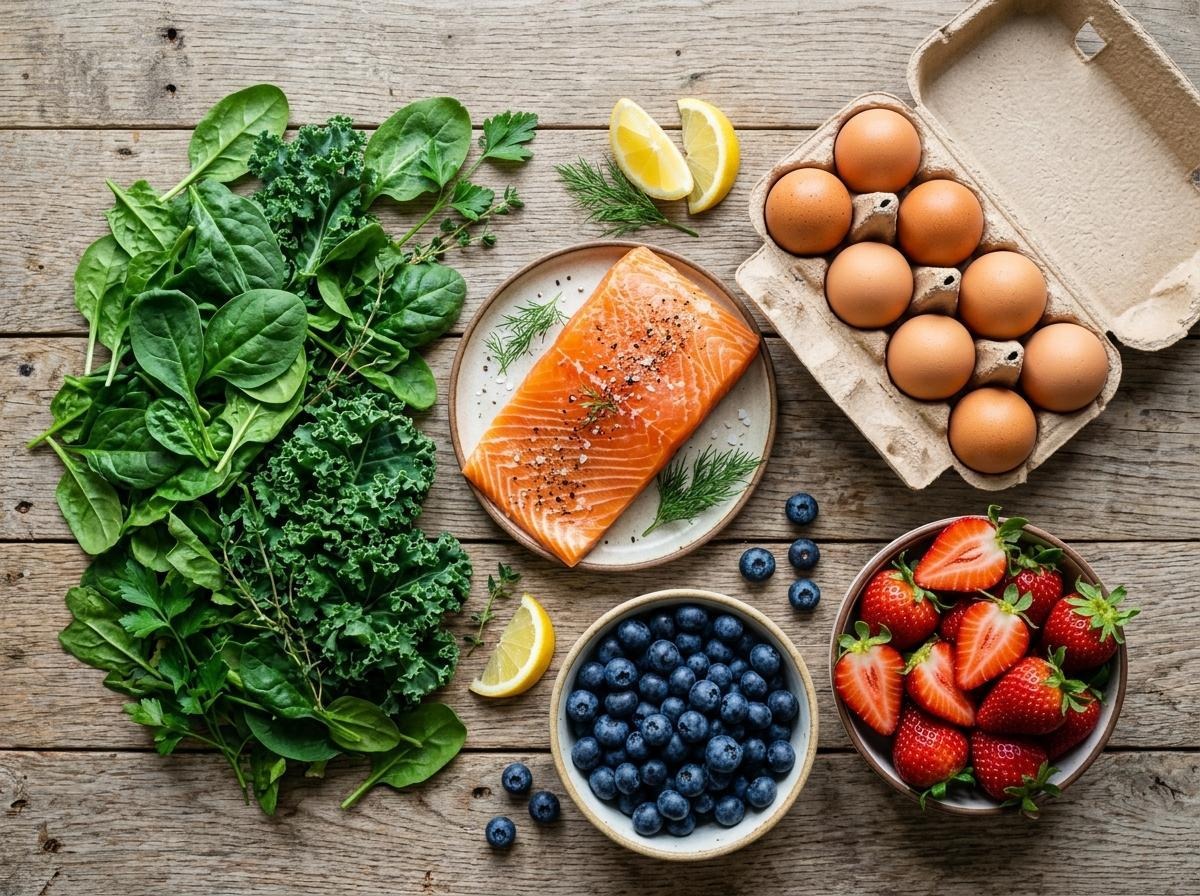
1. Fatty Fish: Salmon, Sardines and Trout
Salmon, sardines, trout and other fatty fish are excellent sources of protein and the omega-3 fatty acids EPA and DHA.
DHA is an important structural component of the brain, making omega-3s particularly interesting to researchers studying neurodevelopment.
Scientists have investigated whether omega-3 supplementation might specifically benefit autistic children, but the evidence remains mixed.
One meta analysis of six randomized controlled trials involving 194 participants found small improvements in measures of hyperactivity, lethargy and stereotyped behavior. However, researchers did not find significant improvement in social responsiveness or overall functioning.
Another systematic review concluded that the available evidence was too limited to establish omega-3 supplementation as an effective treatment for autism.
So salmon should not be thought of as an “autism treatment.”
But omega-3 fats are still important nutrients, and fatty fish provides them naturally along with high quality protein.
For a child who tolerates fish, adding an age appropriate serving of salmon or another low mercury fatty fish can be an excellent nutritional choice.
Why I like it: Omega-3 fatty acids + protein + nutrient density.
2. Eggs
Eggs are another nutrient dense food that can be particularly useful for children who will tolerate them.
They provide high quality protein along with vitamin B12, selenium, riboflavin and, importantly, choline.
Choline is an essential nutrient required by the body for normal cellular function. It is also needed to produce acetylcholine, a neurotransmitter involved in brain and nervous system function.
This does not mean that eating eggs treats autism. It means that eggs provide nutrients required by a developing child’s body and brain.
Eggs also have another advantage for selective eaters: versatility.
They can be scrambled, boiled, baked, made into an omelet, incorporated into pancakes or prepared with different textures. Sometimes an autistic child who refuses one preparation will tolerate another.
For children who accept only small amounts of food, nutrient density matters.
Why I like it: Protein + choline + several important vitamins and minerals.
3. Berries and Other Colorful Fruits
Blueberries, strawberries, raspberries, blackberries, oranges and kiwi provide fiber, vitamin C and numerous naturally occurring plant compounds.
Berries are especially rich in polyphenols, including anthocyanins, which have antioxidant properties.
Again, we have to distinguish good nutrition from autism treatment. There is no convincing evidence that eating blueberries improves the core characteristics of autism.
But fruit can provide nutrients that may otherwise be lacking in a highly selective diet.
This is particularly relevant because recent reviews of food selectivity in autism have identified restricted diets and nutritional deficiencies as genuine concerns. A 2026 review reported food selectivity rates between 21% and 77% across studies and identified deficiencies involving nutrients including vitamin D, calcium and fiber.
Fruit is also sometimes easier to introduce than vegetables because children may prefer its natural sweetness.
If texture is the obstacle, parents can experiment with different forms: fresh berries, frozen fruit, smoothies, unsweetened fruit purées or small amounts incorporated into an already accepted food.
Why I like it: Fiber + vitamin C + naturally occurring antioxidants and plant compounds.
4. Fiber Rich Foods
Fiber deserves special attention in the autism community because gastrointestinal problems are commonly reported among autistic children.
Fiber rich foods include:
Oats, beans, lentils, berries, pears, vegetables, whole grains, chia seeds and certain nuts and seeds when developmentally appropriate.
A major meta analysis found that children with autism had approximately 3.9 times the odds of constipation compared with control children. They also had significantly higher odds of diarrhea and abdominal pain.
A later 2023 meta analysis similarly estimated that approximately 55% of autistic children studied experienced at least one gastrointestinal symptom, with constipation reported in approximately 37%, abdominal pain in 21%, diarrhea in 19%, and abdominal distension in 23%.
That does not mean fiber will solve every gastrointestinal problem. Constipation and abdominal discomfort can have many causes and should be medically evaluated when persistent.
However, adequate dietary fiber and fluid intake are important components of normal bowel function.
Fiber also serves as a substrate for bacteria within the intestinal microbiome. Scientists are actively studying the relationship between the gut microbiome and autism, although research has not established that changing the microbiome can treat autism.
Why I like it: Digestive health + bowel regularity + support for a diverse gut microbiome.
5. Colorful Vegetables
Broccoli, spinach, carrots, sweet potatoes, peas, squash and bell peppers provide combinations of fiber, folate, potassium, vitamins A, C and K, and numerous phytonutrients.
But here is where advice like “feed your child more vegetables” can become frustrating for autism parents.
Many autistic children have genuine sensory differences involving food.
The 2024 systematic review mentioned earlier found that sensitivity to food texture and taste was approximately 2 to 10 times more frequent among autistic children than controls.
So when a child refuses broccoli, it may not simply be stubbornness.
The smell may be overwhelming.
The texture may be intolerable.
The appearance may feel unpredictable.
For these children, exposure can be more realistic than expectation.
Putting one tiny piece of broccoli next to an accepted food is exposure. Allowing a child to touch or smell a vegetable without requiring them to eat it can be progress. Accepting vegetables blended into another tolerated food can also be progress.
For severe food selectivity, parents may benefit from working with a pediatric dietitian, occupational therapist, feeding specialist or other qualified professional.
Why I like them: Fiber + vitamins + minerals + greater dietary variety.
Why Nutrition Deserves More Attention in Autism
The issue is not that autistic children require some completely different form of nutrition.
The issue is that many autistic children have a much harder time obtaining a varied diet.
Research has documented food selectivity rates as high as 76% or more in some autistic populations, depending on how food selectivity is defined and the population studied.
That can potentially create nutritional gaps.
And this is why parents should be cautious about aggressively eliminating foods from an already restricted diet unless there is a medical reason to do so.
For a child eating only ten foods, taking away three foods can be very different from eliminating those same foods from the diet of a child who eats fifty.
Add Before You Subtract
One philosophy I particularly appreciate is:
Before asking what we can remove, ask what we can add.
Can we add one source of omega-3 fatty acids?
Can we find one fruit our child enjoys?
Can we introduce one fiber rich food?
Can we find another source of protein?
Can we expose our child to one vegetable without turning dinner into a battle?
Sometimes we become so focused on eliminating gluten, dairy, sugar, dyes and processed foods that we forget the fundamental question:
Is my child receiving adequate nutrition?
Sometimes One Bite Is Progress
For many autism families, the biggest challenge is not understanding which foods are healthy.
It is getting our children to eat them.
A child may eat only one brand of chicken nuggets because every nugget looks and tastes predictable. A strawberry can be sweet today and sour tomorrow. A blueberry can be firm one day and mushy the next.
For a sensory sensitive child, those differences can matter enormously.
That is why I believe we need compassion when discussing autism and nutrition.
A parent whose child survives on five foods does not need judgment. That parent may already be fighting an enormous battle simply to keep their child adequately nourished.
Sometimes success isn’t an entire plate of vegetables.
Sometimes success is touching the carrot.
Sometimes it is smelling the strawberry.
Sometimes it is licking the blueberry.
And sometimes, after weeks or months of exposure, it is finally taking one bite.
That counts.
A Final Thought From One Autism Parent to Another
Salmon will not cure autism.
Blueberries will not make autism disappear.
Broccoli will not change who our children are.
But protein, healthy fats, fiber, vitamins and minerals matter to every developing child.
And because research tells us that food selectivity and gastrointestinal problems occur frequently among autistic children, nutrition deserves our attention.
Instead of searching for the perfect “autism diet,” perhaps we can focus on something more realistic:
nourishing the individual child in front of us.
Respect their sensory differences. Investigate genuine gastrointestinal symptoms. Work with professionals when necessary. Introduce nutritious foods patiently. And celebrate progress that other people might never understand.
Because in an autism family, sometimes one new accepted food really is a victory worth celebrating.
Scientific Sources
Mørdre M., et al. Food selectivity in children and adolescents with autism spectrum disorders, a systematic literature review. 2024. Review of 20 studies reporting food selectivity prevalence of 21% to 76%.
Sharp W.G., et al. Gastrointestinal symptoms in autism spectrum disorder: a meta analysis. Pediatrics. Analysis found significantly higher odds of gastrointestinal symptoms, including constipation, diarrhea and abdominal pain, among children with ASD.
Gan J., et al. Questionnaire based analysis of autism spectrum disorders and gastrointestinal symptoms in children and adolescents: a systematic review and meta analysis. 2023. Estimated 55% prevalence of at least one gastrointestinal symptom among children with ASD included in the analysis.
Cheng Y.S., et al. Supplementation of omega-3 fatty acids may improve hyperactivity, lethargy, and stereotypy in children with autism spectrum disorders: a meta analysis of randomized controlled trials. Six trials involving 194 participants were analyzed.
Disclaimer: This article is for general educational purposes only and does not constitute medical or nutritional advice. No individual food or diet has been proven to cure autism. Parents should consult their child’s pediatrician or a registered dietitian before making significant dietary changes, particularly when a child has severe food selectivity, allergies, gastrointestinal symptoms or an already restricted diet.
Walking With Alex Foundation is committed to supporting families affected by autism through education, advocacy, resources and access to meaningful therapies and support.