
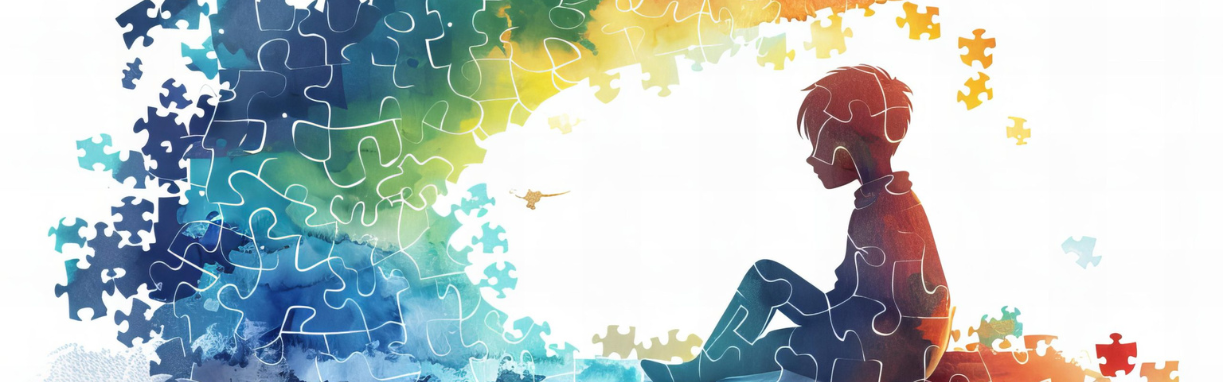
Author: Nina Garayan
For too long, the word autism has carried with it a shadow of misunderstanding. Many people hear the diagnosis and immediately picture limitations — a child who struggles to speak, avoids eye contact, or lives in “their own world.” But the truth is far more beautiful and complex. Autism is not a single story or a single face; it is a vast and colorful spectrum that reflects countless ways of thinking, feeling, and connecting. It doesn’t mean something is wrong — it means the brain processes the world differently.
Autism is not a wall that separates a child from life; it’s a window into a different kind of beauty. When we take the time to look through that window, we see minds that notice the details others miss — the pattern of sunlight on a floor, the rhythm of the ocean waves, the hum of a refrigerator that most of us tune out. What might overwhelm others can comfort a child with autism because it brings order and predictability in a world that often feels chaotic. The stereotypes — that autistic children are emotionless or detached — couldn’t be further from the truth. Many autistic children feel everything ,sometimes so deeply that words aren’t enough to contain it.
I think of a little boy named Alex, who once sat by the shore for hours, tracing circles in the sand with a seashell. To a passerby, he might have looked distant. But when his mother sat beside him and asked what he was doing, he quietly whispered, “I’m making waves like the ones that make me feel safe.” That was his way of connecting — through motion, rhythm, and peace. Another child, Levon, doesn’t always meet people’s eyes, but he greets every person he loves by gently touching their hand. That simple gesture says I see you, I trust you, I care. These are not moments of withdrawal; they’re expressions of love in their own language.
Autism also means passion. Some children become fascinated by trains, numbers, or planets — not just as passing interests but as worlds they fully inhabit. A girl named Maya, for example, can name every constellation in the night sky and will spend hours explaining how stars are born. Her fascination is not obsessive; it’s her joy, her language of wonder. These intense interests often become gateways to learning, creativity, and even careers later in life.
Beyond the stereotypes, autism is a story of resilience — of children and families who wake up every day and navigate a world not always designed for them. It’s parents learning new ways to communicate, teachers adapting lessons to new minds, and communities growing more compassionate because of one child’s presence. It’s the realization that progress doesn’t always look like words or test scores; sometimes it’s a smile, a moment of eye contact, or the first time a child says, “I love you.”
When we truly understand autism, we stop trying to make autistic children fit into the world — and instead, we start reshaping the world to fit them. We create classrooms that honor sensory needs, friendships that value differences, and spaces where every child feels safe to be themselves. Autism isn’t about what’s missing; it’s about what’s different. And when we embrace those differences, we discover that the things that make these children unique are the very things that make our world more compassionate, more creative, and more human.
Autism isn’t a limitation. It’s a lens — one that allows us to see life through colors, sounds, and feelings that most of us never notice. Beyond the stereotypes lies an entire universe of brilliance, honesty, and heart. And the more we choose to see it, the more we realize: the world needs minds like these.